
The tenant on a shophouse's upper floor is not always an office. Fitness studios, yoga or pilates classes, and small gyms are among the businesses that look for space on the second or third floor, because what they need is an open floor and they have no use for a shopfront on the street. For a ruko owner that is an attractive tenant: the cost of laying rubber flooring and installing heavy equipment gives them a reason to sign a long lease.
A gym differs from an office tenant in three ways that need sorting out before anyone signs: the weight the floor slab has to carry, the electricity it needs, and the local tax added to every membership fee. All three have written rules, and all three can go into the lease.
Ruko floors are usually designed for offices or shops
Indonesia's building load standard is SNI 1727:2020, whose live-load table follows the American standard ASCE 7-16. In Table 4.3-1, office space carries a minimum live load of 2.40 kN/m², about 245 kg per square metre. Gymnasiums sit in the 4.79 kN/m² group, about 490 kg per square metre, the same as assembly rooms. That puts a gym's design load at about twice an office's.
| Floor use | Minimum live load (SNI 1727:2020) | Note |
|---|---|---|
| Office | 2.40 kN/m² | The usual benchmark for upper ruko floors |
| Assembly room | 4.79 kN/m² | A benchmark for group exercise studios |
| Gymnasium | 4.79 kN/m² | Before point loads from weight racks and machines |
Those figures are spread loads. A gym adds point loads on top: a barbell rack full of plates, a cable machine, dumbbells dropped from shoulder height. Treadmill vibration and jumping in an aerobics class also carry through to the floor below. A strong foundation does not mean a strong second-floor slab, because it is the slab and its beams that hold that equipment up.
Before accepting a gym tenant, ask the original developer or contractor for the structural drawings and the design floor load. If there are none, hire a structural engineer to run the numbers. The result tells you where heavy equipment can go (usually near the columns), how thick the rubber flooring should be, and whether to ban dropping weights upstairs.
2,200 VA runs out fast
Ruko Sapphire, for example, comes with a 2,200 VA connection. One commercial treadmill plus two split air conditioners can already exceed that, before lights, speakers and the water pump for the showers. A serious gym will almost certainly need a power upgrade from PLN. The difference between business and household tariffs for a ruko is covered in B2 shophouse vs B1 home electricity tariffs.
Electricity bills in Bekasi City also carry a local tax. Bekasi City Regulation No. 1 of 2024 sets the tax on electricity (PBJT tenaga listrik) for 2,200 VA business customers at 8.5%, and Regulation 9/2025 kept it. The lease should say who pays for the upgrade, who pays the monthly bill, and whether the connection goes back to its original size when the lease ends.
A 10% local tax, charged to members and paid over by the tenant
Bekasi City Regulation No. 1 of 2024 on Local Taxes and Levies lists “sports using a place/space and/or equipment for sport and fitness” as an object of the tax on arts and entertainment services, PBJT jasa kesenian dan hiburan (Article 29(1)(i)). Its elucidation names paid fitness centres directly.
The rate is 10% (Article 33(5)(a) point 9). Regulation 9/2025, enacted on 7 July 2025, rewrote that rate article and kept fitness at 10%. The tax base is the amount the operator receives (Article 32), so monthly memberships and day passes both count.
- Who bears it: the consumer, meaning the gym member (Article 30).
- Who the taxpayer is: the service provider, meaning the tenant running the gym (Article 31). The ruko owner is not the taxpayer for the tenant's business.
- What is exempt: activities with no charge, such as a free community exercise session (Article 29(2)).
- What has a different rate: if the tenant adds a steam room or spa, that service falls in the 40% bracket (Article 33(5)(c)), separate from the 10% for fitness.
Because the obligation sits with the tenant, what the owner needs is a compliance clause: the tenant registers as a local taxpayer and handles its own business licence.
On the owner's side, the rent carries a 10% final income tax
Income from renting out a building is subject to a 10% final income tax on the gross rent under Government Regulation (PP) 34 of 2017. If the tenant is a company, such as a PT or CV running the gym, the tenant withholds the tax and gives the owner a withholding slip. If the tenant is an individual, the owner pays it in directly. The flow is explained in renting a ruko to a company: who pays the final tax.
Clauses worth writing into the lease
- Load limits and equipment zones based on the structural engineer's calculation, including a ban on dropping weights on upper floors.
- Impact flooring in rubber or thick mats, laid by the tenant before equipment goes in.
- Opening hours and music volume. Bekasi City Regulation 2/2023 Article 35 bans disturbances around homes. The enforcement charge can reach Rp50 million for a business or the building owner, so the ruko owner carries part of the risk when a row of shophouses backs onto housing.
- Power supply and a sub-meter so each floor's usage can be counted separately.
- Tax and licence compliance by the tenant, including the PBJT and its business licence.
- Making good at the end of the lease: rack bolt holes in floors and walls, mirrors and any added installations.
Ruko Sapphire for upper-floor tenants
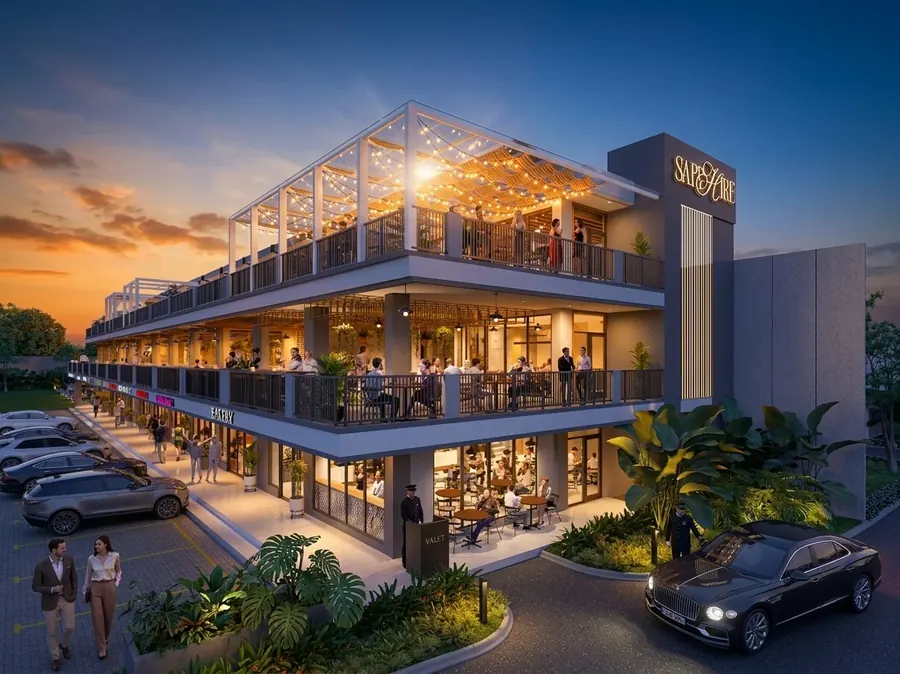
Ruko Sapphire at Kingspoint, Jl. Raya Perjuangan, North Bekasi, has three floors plus a rooftop, a 172 m² building on a 72 m² plot, pile and stone foundations, a 2,200 VA connection, and prices from around Rp1.9 billion. It sits about five minutes from Bekasi Station and Summarecon Mall. The investment side is covered in investing in a Bekasi shophouse. If you plan to take a gym tenant, ask the technical team for the design floor load before you make an offer.
Frequently asked questions
Does a gym in a shophouse pay local tax in Bekasi City?
Yes. Bekasi City Regulation 1/2024 puts paid fitness centres under the tax on arts and entertainment services at 10%, and Regulation 9/2025 kept that rate. The tax is calculated on what members pay and is paid over by the gym operator.
Is a ruko's second floor strong enough for a gym?
It depends on its design load. SNI 1727:2020 sets a minimum live load of 4.79 kN/m² for gymnasiums, about twice the 2.40 kN/m² for offices. Ask the developer for the structural drawings or get a structural engineer's calculation before heavy equipment goes in.
Who pays the gym tax, the owner or the tenant?
Members bear it, and the tenant running the gym collects and pays it over. The owner pays the 10% final income tax on the rent they receive.
References: SNI 1727:2020 Minimum Design Loads and Associated Criteria for Buildings and Other Structures, Table 4.3-1; Bekasi City Regulation No. 1 of 2024 on Local Taxes and Levies, Articles 29–33 and elucidation; Bekasi City Regulation No. 9 of 2025; Bekasi City Regulation No. 2 of 2023, Article 35; Government Regulation No. 34 of 2017. This article is for information only and does not replace a structural engineer's calculation or tax advice.
Working out a shophouse to rent out?
Ask about floor specifications, power supply, and the Ruko Sapphire units still available on Jl. Raya Perjuangan, North Bekasi.
Ask on WhatsApp