
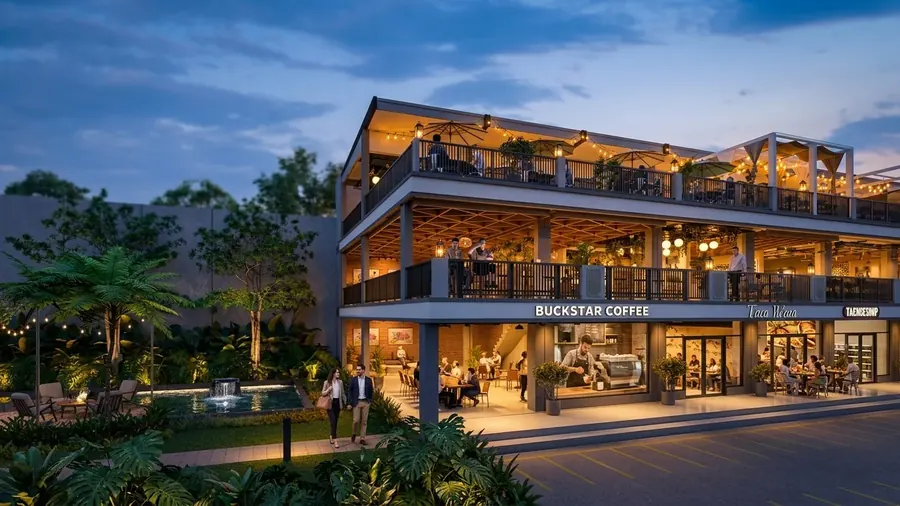
When you buy a 3-story Ruko Sapphire in North Bekasi for business use, the standard PLN power installed by the developer is usually 6,600 VA or 7,700 VA — category B2 (business). Meanwhile, the Rumah Emerald 70 standard installation is 2,200 VA, category R1 (household) — often called "B1" in casual conversation though technically coded R1. This isn't a developer typo. It's a technical choice based on expected load. But the bill difference is real.
Let's compare apples to apples using PLN tariffs in effect for Q2 2026, per Ministry of Energy decree SK Menteri ESDM No. 28.K/TL.04/MEM.S/2024 on electricity tariff adjustments (still the active reference until new regulation drops).
Per-kWh Tariff: B1 (R1 Household) vs B2 (Medium Business)
| Category | Capacity | Use | Tariff/kWh 2026 (Rp) | Demand charge/month |
|---|---|---|---|---|
| R1 (household) | 900 VA subsidized | Domestic | 605 (subsidized) | None (prepaid) |
| R1 (household) | 900 VA non-subsidized | Domestic | 1,352 | ~Rp 24,300 |
| R1 (household) | 1,300 VA | Domestic | 1,444.70 | ~Rp 36,100 |
| R1 (household) | 2,200 VA | Domestic | 1,444.70 | ~Rp 61,100 |
| R2 (large household) | 3,500–5,500 VA | Domestic | 1,699.53 | ~Rp 105,700 |
| B1 (small business) | ≤450–5,500 VA | Small commerce | 1,444.70 | ~Rp 65–138k (varies) |
| B2 (medium business) | 6,600–200,000 VA | Medium commerce | 1,444.70 LWBP + WBP multiplier | ~Rp 169,500 (6,600 VA) |
| B3 (large business) | >200 kVA | Large commerce | Negotiated | — |
Per-kWh tariff looks similar at first glance. What blows up the monthly difference: demand charge and usage pattern for ruko, where a lot of consumption falls during WBP (Peak Load Period, 6 PM–10 PM) — the WBP multiplier for B2 is K = 1.5× normal tariff.
Case Study 1 — Rumah Emerald 70 (R1 2,200 VA)
Bagus lives in the Rumah Emerald 70 cluster at Kingspoint, family of four. Usage pattern:
- Two ½ HP ACs (ground floor bedroom and master bedroom), 8 hours/day each
- 2-door fridge, water dispenser, washing machine, 43" LED TV
- Booster water pump 250W, 30 min/day
- 12 LED bulbs, 5 hours/day
Average monthly consumption measured March–April 2026: 340 kWh. PLN bill:
- Usage: 340 × Rp 1,444.70 = Rp 491,198
- Demand charge (postpaid 2,200 VA): Rp 61,100
- PPJ (Street Lighting Tax, Bekasi 3%): ~Rp 16,500
- Total bill: ~Rp 568,800/month
Full per-room consumption breakdown is in monthly electricity for 2-story homes in Bekasi.
Case Study 2 — Ruko Sapphire 3-Story as a Cafe (B2 6,600 VA)
Reni opens a cafe in a Ruko Sapphire right next to Bagus. Usage pattern:
- Two 1-HP ACs (ground floor seating, second floor meeting), 10 hours/day
- 1,500W espresso machine, on-off 6 hours/day (~3 hours continuous duty)
- Two display fridges (450W + 380W) 24/7
- Dessert freezer (220W) 24/7
- Blender, mixer, electric oven (intermittent, ~4 kWh/day)
- 28 commercial lamps, 12 hours/day
- POS, WiFi router, CCTV 24/7
Monthly consumption measured March–April 2026: 1,150 kWh, split 720 kWh LWBP + 430 kWh WBP (peak cafe hours 6 PM–10 PM).
- LWBP: 720 × Rp 1,444.70 = Rp 1,040,184
- WBP: 430 × Rp 1,444.70 × 1.5 = Rp 931,832
- B2 6,600 VA demand charge: ~Rp 169,500
- PPJ (Bekasi commercial 6%): ~Rp 130,300
- Total bill: ~Rp 2,271,800/month
Monthly difference Ruko Sapphire (Reni's cafe) vs Rumah Emerald 70 (Bagus): Rp 1.7 million. Annually: Rp 20.4 million. Over the first 20 years of Ruko Sapphire: ~Rp 408 million cumulative electricity — a bigger number than a storefront renovation or full outdoor AC replacement.
Case Study 3 — Ruko Sapphire as Clinic or Office (B2 6,600 VA, Lower Load)
Different scenario: ruko used as a dental clinic or consulting office with lower load (standard AC, few heavy appliances, operating hours 9 AM–5 PM).
- Monthly consumption ~620 kWh, mostly LWBP
- LWBP: 620 × Rp 1,444.70 = Rp 895,714
- Demand charge: Rp 169,500
- PPJ 6%: ~Rp 63,900
- Total bill: ~Rp 1,129,000/month
Difference vs the home stays significant but the delta drops to ~Rp 560k/month. For a ruko on regular business hours (not cafe/restaurant/karaoke crowded into WBP), the electricity bill is more reasonable.
Why B2 Demand Charge Runs Higher — Technical Reason
PLN has three tariff components: energy (kWh), capacity (kVA), and reactive power (kVAR). For R1 households, only the energy component matters in detail; demand charge is relatively small. For B2 ruko, all three apply:
- Energy component: kWh tariff, with 1.5× WBP multiplier during peak hours
- Capacity component (kVA): monthly charge per installed kVA regardless of actual use
- Reactive power component (kVAR): penalty if power factor drops below 0.85 — common for businesses with many motors (AC compressors, exhaust fans)
Frequently missed by ruko owners: power factor penalty. When ruko AC compressors cycle on-off rapidly, power factor drops. PLN adds a "penalty" appearing as extra cost on the bill. Cafe and salon owners often hit this because many small motors run together.
Strategies to Cut B2 Ruko Bills
1. Install a capacitor bank for power factor correction
5–15 kVAR capacitor bank for a 3-story ruko runs Rp 4–9 million once. Raises power factor from 0.75 to 0.92, eliminating kVAR penalty. Payback 8–16 months for cafe ruko.
2. Shift heavy loads to LWBP
WBP 6 PM–10 PM carries 1.5× multiplier. Dishwashing, oven cleaning cycles, walk-in freezer pull-down — all can be scheduled outside WBP. For Reni's cafe in the case study, potential savings 8–14% if load schedule shifts.
3. Consider downgrading capacity if business changes
Ruko Sapphire ships at 6,600 VA. If the actual business only needs 4,400 VA (e.g., consulting office without heavy AC), drop to B1 5,500 VA. Demand charge drops ~30%. kWh tariff stays the same, but fixed charge runs much lower. Capacity reduction process: 7–14 business days via PLN Mobile, cost ~Rp 600k.
4. Install rooftop solar to offset daytime load
A 3-story ruko has 60–80 m² of roof — enough for 8–12 solar panels at 450W = 3.6–5.4 kWp. Daytime output ~16–24 kWh/day. For a ruko's ~30–40 kWh/day daytime consumption, solar covers 50–70% of daytime load. ROI 6–9 years at the higher B2 tariff vs R1.
Technical setup and PLN permits detailed in how to install solar panels in Bekasi clusters — the principle's mostly the same, but ruko adds an extra step: switching from prepaid to import-export meter.
Number ruko investors often forget: total cost of ownership over 20 years for Ruko Sapphire isn't just the mortgage payment. B2 electricity Rp 400–500 million + IPL Rp 60–80 million + insurance + maintenance + PBB. Calculate everything upfront before estimating rental yield.
Implications for Ruko Sapphire Investors
Before buying a Ruko Sapphire as your own business location or for rent-out:
- Ask the developer about installed capacity. Kingspoint Sapphire ships standard 6,600 VA (B2). If your business needs less, capacity downgrade to 4,400 VA can be done post-handover.
- Check the tenant's business pattern. Cafe, restaurant, salon, karaoke = high bill (lots of WBP). Clinic, office, retail = lower bill. Set rent according to tenant type — cafe tenants will negotiate rent down if electricity is high.
- Add capacitor bank and solar option to the initial budget. Rather than installing reactively (after kVAR penalty appears), install proactively. Save Rp 5–15 million/year over 20 years.
- Know when to use prepaid vs postpaid meters. Postpaid is cheaper administratively for B2, prepaid is easier to hand off between tenants. See prepaid token vs postpaid electricity for operational comparison.
What's Changing in 2026 — PLN Smart Meter Rollout
PLN smart meters started rolling out in Bekasi since Q1 2026 (now covering ~12 priority clusters). For B2 ruko, biggest impact: kWh measurement becomes more accurate and WBP/LWBP reads automatically. Ruko owners who previously "didn't feel" the WBP charge because old meters didn't distinguish — they'll now see explicit WBP charges on bills. Expectation: cafe/restaurant ruko bills may rise 5–9% while office ruko bills may drop 2–4% (since they used to be charged WBP without actually operating at night).
Full rollout in Bekasi targeted Q3–Q4 2026. For ruko owners freshly closing — install capacitor bank and power monitoring before the smart meter arrives.
Want a monthly electricity estimate for Ruko Sapphire for your business?
Tell us the business type — cafe, clinic, office, or retail — and the Kingspoint team will compute the B2 bill estimate plus savings scenarios (capacitor + load shift + solar). Direct via WhatsApp.
Chat WhatsApp Now