
Every year there are stories of buyers burned by developers: projects that stall, certificates that take years to arrive, or buildings that look nothing like the brochure. Not every developer is bad, but it takes some scrutiny to tell the difference between one that delivers and one that overpromises.
The good news: there are clear signals you can read early on. Here are 7 things worth checking before you commit to any developer.
7 Things to Check
Look Up Their Track Record
A reputable developer leaves a trail: past projects you can research. Find out what they've built before, whether units were handed over on schedule, and what the build quality looks like a few years in. A first-time developer isn't automatically a red flag, but higher scrutiny is warranted across the other points below.
Verify Land Legality
This is the most critical check. Before anything else, ask: does the land have a valid Izin Lokasi (location permit), and is there a Master Certificate in the developer's name? A trustworthy developer will show you these documents without hesitation. If they won't, or can't, that's a serious warning sign with no good explanation.
Ask About the Building Permit (PBG)
Since 2021, Indonesia replaced the old IMB (building permit) with the PBG (Persetujuan Bangunan Gedung). Make sure the project has a valid PBG. Without it, the building is technically unlicensed, and you carry the risk. Banks processing mortgage applications will typically require this document anyway, so it's a question that needs a clear answer.
Visit the Site and Show Unit in Person
Brochure renders can look impressive, but actual site conditions can't be faked. Visit in person. Check the access roads, the surrounding area, any existing construction. If there's a show unit, walk through it, checking material quality, wall thickness, ceiling height. This gives you an honest picture that no 3D visualization can match.
Read the PPJB Before Signing
The PPJB (Perjanjian Pengikatan Jual Beli, Sale and Purchase Binding Agreement) is the contract between you and the developer before the final deed (AJB) is executed. Every developer promise should be spelled out here: building specs, handover timeline, late delivery penalties, and cancellation terms. If the penalty clause for late handover is vague or missing entirely, that's a red flag. Consider having a notary review it; the fee is small relative to the risk it mitigates.
Read Reviews from Past Buyers
Google Maps, Facebook property groups, forums like rumah123: these are gold. Look for specific, detailed reviews rather than generic ones. Complaints about "slow certificate processing" or "finishing didn't match specs" are far more informative than five stars with no explanation. Pattern recognition matters here: one bad review might be an outlier; five similar complaints is a pattern.
Watch How the Sales Team Handles Tough Questions
This is one of the most underrated signals. Ask uncomfortable questions. "Why haven't all certificates been split yet?" or "What happens if handover is delayed six months?" A professional sales team at a credible developer will answer directly and honestly, even if the answer isn't perfect. What to watch out for: evasion, constant topic-changing, or high-pressure closes that shut down your questions.
One practical rule: If more than two of your questions go unanswered clearly in a single visit, that's enough reason to be cautious, or to look elsewhere. A developer with nothing to hide has nothing to hide.
Warning Signs to Watch For
Beyond the seven points above, a few patterns warrant extra caution:
- Pricing noticeably below market rate: may signal legal issues or quality problems not yet disclosed
- "Book now or miss out" pressure tactics: aggressive sales behavior often signals a developer not confident in its own product
- Unwillingness to show legal documents: no legitimate explanation exists for refusing to show land certificates or permits
- Marketing office only open during events: serious developers maintain a permanent presence at the project site
- No verifiable track record: a polished name in a brochure is not the same as a real history of completed projects
Why This Matters in the Bekasi Area
The North Bekasi corridor, particularly along the planned MRT Phase 3 route, is seeing a surge of new projects. Some developers launching here are credible and established; others are newer and less tested. With land values climbing and competition intensifying, there's real incentive for less serious players to sell the dream first and build later.
Careful due diligence isn't paranoia; it's just responsible buying. The more money involved, the deeper the verification should go.
About Kingspoint Residence
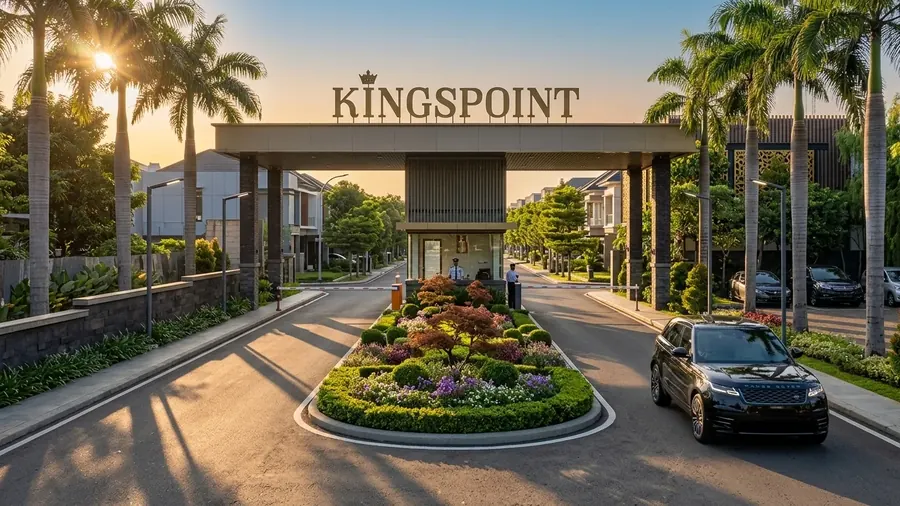
Kingspoint is developed by Mandiri Development, operating in the North Bekasi area. The project is located on Jalan Raya Perjuangan, close to Bekasi Station and the expanding MRT Phase 3 corridor.
For buyers who want to verify directly, our team can show land documents, walk you through the active show unit, and give you an honest construction update during your visit. Not promises on paper; actual conditions you can see for yourself.
Want to verify Kingspoint in person?
Ask about permits, specs, or schedule a show unit visit. Our team will give you straight answers.
Chat on WhatsApp