
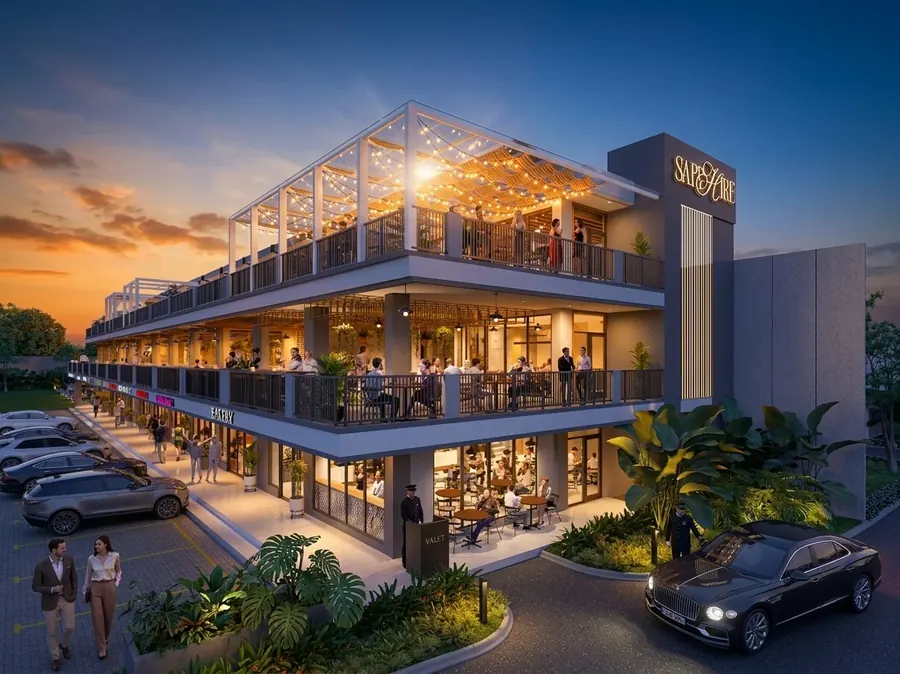
In mid-June, a contact of mine — a small catering business owner based in Kayuringin — told me about four months of shophouse hunting, from Bekasi Barat all the way to Medan Satria. Nothing clicked: ground floor too narrow for a production kitchen, or annual rent almost on par with a purchase installment. He started doing the math differently — instead of renting indefinitely, buying a shophouse with multiple floors that could serve different functions made more sense financially.
That story matters because a lot of SME operators in Bekasi face the same calculation going into H2. Demand is there, but the real math between renting versus buying, and between upfront capital versus realistic payback, often never gets done properly.
Why H2 Often Becomes a Business-Launch Window
Three spending cycles overlap in H2 — and each drives different local economic activity:
Post-Eid al-Adha (June–July): After the Eid peak, some people shift into "investment mode" — whether opening a business or buying property. Funds initially set aside for holiday expenses often end up as business capital. In several dense residential pockets of North Bekasi, July sees the highest rate of new food stall openings throughout the year.
Back-to-school season (July–August): Areas near schools and offices see a surge in demand for everyday services — from stationery shops and photocopying to canteens and food logistics. Jl. Raya Perjuangan and the wider Summarecon Bekasi corridor fit this profile, with several middle and high schools plus active office clusters nearby.
Year-end ramp-up (September–December): Corporate events, graduation catering, November–December retail peaks — businesses that serve these needs require proper physical premises. A rented house or home-based setup often becomes the bottleneck. Nah, this is exactly when having your own shophouse makes the difference.
So opening a physical business in the middle of H2 isn't just trend-chasing — there's real economic logic behind it. That logic holds if you already have a clear business concept, though. Not if you're still figuring out what kind of F&B you want to run.
Business Types That Actually Fit a 3-Storey + Rooftop Shophouse
Ruko Sapphire at Kingspoint measures 4.5 × 16 m, land area 72 m², built-up area 172 m² spread across 3 floors plus a rooftop, with 2,200 VA power supply. That configuration has specific characteristics — not every business concept fits it well.
| Business Type | Ideal Floor Use | Power Requirement | Notes |
|---|---|---|---|
| Cafe / F&B dine-in | GF (cashier + dining) + Rooftop (outdoor seating) | Upgrade to 5,500–7,700 VA needed (espresso machines, AC, kitchen) | Rooftop is a strong differentiator in dense areas; requires IUMK permit + SLF |
| Small clinic / pharmacy | GF (reception + pharmacy) + 2F (consultation rooms) | 2,200 VA sufficient for 1–2 rooms without heavy equipment | High organic demand in residential clusters; hybrid model (room rental to specialist doctors) viable |
| Professional services office (notary, consultant, accountant) | GF (meeting + reception) + 2F (work) + 3F (archive/meeting) | 2,200 VA generally sufficient | Low fit-out cost vs F&B; more stable monthly cash flow |
| Warehouse + storefront | GF (retail) + 2F–3F (stock/warehouse) | 2,200 VA sufficient unless cold storage is needed | Suits FMCG distributors or frozen food businesses; upper floors can be sub-leased |
| Catering kitchen / food production | GF–2F (kitchen + packing) + 3F (management) | Upgrade required; industrial burners + exhaust draw heavy power | Needs ventilation and PIRT permit; non-residential location is an advantage for licensing |
One thing often overlooked: electrical upgrades. For any serious F&B operation, 2,200 VA almost certainly falls short. Upgrading to 7,700 VA costs roughly IDR 3–5 million including PLN fees and partial rewiring. Not a huge number, but it belongs in the opening budget from day one.
Foot Traffic & Location: What Makes or Breaks a Shophouse Business
Jl. Raya Perjuangan, North Bekasi has several concrete advantages — and one realistic limitation worth anticipating.
What works in your favor:
- 5 minutes from Summarecon Mall Bekasi — one of the busiest shopping centers in the city, meaning foot traffic in this corridor stays high even on weekdays.
- 5 minutes from Bekasi Station (KRL Commuter Line) — commuters heading home are a natural captive market for quick F&B and convenience services.
- 10 minutes to Bekasi Barat Toll — important for businesses that need logistics access or regular deliveries.
- Dense residential clusters with active housing estates — demand for daily services (laundry, clinics, minimarkets) is organic and consistent rather than event-dependent.
What to anticipate: New shophouses in residential areas typically go through a 3–6 month warm-up period before foot traffic stabilizes. If your business depends heavily on walk-in customers rather than repeat orders or delivery, the first few months can be cash-flow tight. Soalnya a membership model, subscription-based service, or B2B focus tends to hold up better in the early months.
Rough Capital Calculation & Honest Risk Disclosure
Ruko Sapphire is priced at around IDR 1.9 billion. With commercial KPR, the down payment is typically 30% — meaning IDR 570 million in upfront cash. The remaining principal of IDR 1.33 billion carries commercial loan interest rates currently around 11–12% per year (BI Rate at 5.50% as of 10 June 2026, plus the larger bank spread applied to commercial vs residential mortgages).
Over a 10-year tenor, monthly installments run roughly IDR 19–21 million. Your business needs to generate at least IDR 25–30 million net per month just to cover the installment plus basic overhead — before you factor in staff, inventory, or marketing.
An approach that often makes more sense: Buy outright or with a large down payment, then sub-lease floors 2–3 to another tenant at IDR 8–12 million/month, while running your own business on the ground floor. The installment burden drops significantly and risk is split between two revenue streams.
Risks that deserve honest mention:
- Softening consumer sentiment. Middle-class purchasing power in Indonesia has been under pressure since early 2026. Premium F&B concepts in new locations are more exposed than affordable, high-volume options.
- Commercial loan rates at 11–12%. This is well above residential mortgage rates. The BI Rate sitting at 5.50% doesn't automatically pull commercial lending rates down in the near term — the spread banks charge on commercial property is structurally wider.
- Shophouse oversupply in parts of Bekasi. Some corridors in Bekasi have more shophouse supply than demand, particularly in areas that haven't matured yet. An active corridor like Jl. Raya Perjuangan offers more protection, but it's not immune.
- Fit-out takes time and money. For a cafe or clinic, interior build-out can run IDR 150–400 million depending on concept. New shophouses are handed over in standard shell condition, not move-in ready for commercial use.
So who should seriously consider this? Business operators who already have a proven model at smaller scale and need permanent space to grow — not someone testing a concept for the first time. Or investors with a 5+ year horizon targeting property value appreciation plus rental yield from a commercial tenant.
For more context on the product and current pricing, visit the Ruko Sapphire product page or browse the Kingspoint homepage. The full English blog index is at blog/en.
Ask about Ruko Sapphire directly
The sales team can walk you through commercial KPR simulations, floor sub-leasing options, and payback estimates based on your specific business type.
Chat on WhatsApp