
Every time news of a new transit line lands, land prices nearby get talked up too. This pattern is nothing new in Greater Jakarta: once a KRL station, a toll road, or an MRT plan appears, demand for homes within walking distance rises, and prices tend to follow. The MRT Phase 3 plan touching Harapan Baru and Karangsatria in Bekasi has some people starting to eye property nearby.
So let me be honest from the start: being near the MRT is a strong factor, but it's not a magic button that automatically prints profit. Some people gain a lot; others get stuck because they bought too high at the peak of the hype. The difference isn't luck — it's how they read a location and hold themselves back.
Why Property Near Transit Tends to Rise
The logic is simple: travel time is currency. People will pay more for a home that cuts their daily commute, especially in an already-dense area like Bekasi. When a point connects to a fast route into Jakarta, the buyer pool widens — not just local families, but workers shuttling to the city centre every day.
This effect is often called a transit premium. Property within a comfortable radius of a station is generally more resilient when the market slows and gets absorbed faster when it recovers. I dig into this idea of areas designed around a transit node in the piece on Bekasi TOD areas and the benefits of living near public transit.
What's interesting is that this effect isn't only about resale price. For those who lease out, proximity to a station widens the tenant pool — workers looking for a home near fast transit are usually willing to pay more rent and tend to stay longer. So transit can support two sides at once: capital gain potential from price, and cash flow from rent. Rental figures in North Bekasi are also helped by Summarecon Mall Bekasi and the KRL access at Stasiun Bekasi that already run today. But remember, good rent needs a unit that's livable and managed, not just close to the tracks.
Speculator vs Investor: Two Games, Two Fates
The thing is, many people conflate two things that are actually different. A speculator chases short-term price spikes off news sentiment; an investor weighs cash flow and location fundamentals for the long haul. Both can profit, but their risk profiles are far apart.
| Aspect | Speculator approach | Investor approach |
|---|---|---|
| Time horizon | Months to 1–2 years | 5 years and up |
| Decision basis | News, hype, following the crowd | Location fundamentals, access, legality |
| Source of gain | Fast price spike | Gradual capital gain + rental potential |
| Main risk | Buying at the peak, project delays | Slow liquidity, needs staying power |
The risk speculators most often forget: infrastructure projects can slip behind schedule. MRT stages are long — planning, land acquisition, construction — and each stage can shift. If you buy assuming the station opens in a certain year, and it slips, your holding costs (installments, taxes, upkeep) keep running while the price rise you're waiting for hasn't arrived.
Note: this piece is analytical and educational, not a solicitation or investment advice. Projected price gains are not guaranteed; the MRT Phase 3 schedule and alignment can change with policy. Always verify project status from official sources and check a unit's legality before deciding.
How to Read a Location Before Buying
So if you lean toward the investor approach, a few things are more worth checking than just "near the MRT."
How near, and how real?
Near on a brochure isn't necessarily near on foot. Measure the real distance to the planned station point, and confirm the project status — still a proposal, already in planning, or under construction. The more certain the stage, the smaller the risk that you're paying a premium for something that may not materialise.
Is the location already "alive" without the MRT?
The best locations usually already have value of their own before transit arrives. The Jl. Raya Perjuangan area in North Bekasi, for instance, is already close to Stasiun Bekasi (KRL), Summarecon Mall Bekasi, and about 10 minutes to Tol Bekasi Barat — so MRT Phase 3 later adds a layer rather than being the only reason. An asset that's already alive holds up better if the transit plan misses.
Who's building it, and what's their track record?
A good location can still disappoint if the developer is slow to finish or the handover drags. Check the developer's track record: whether earlier projects were completed on time, whether the land legality is clear, and whether certificates can be split per unit. For a project leaning on a future-infrastructure story, the credibility of whoever is building becomes your safety net if the transit timeline slips.
A home to live in, or a shophouse for yield?
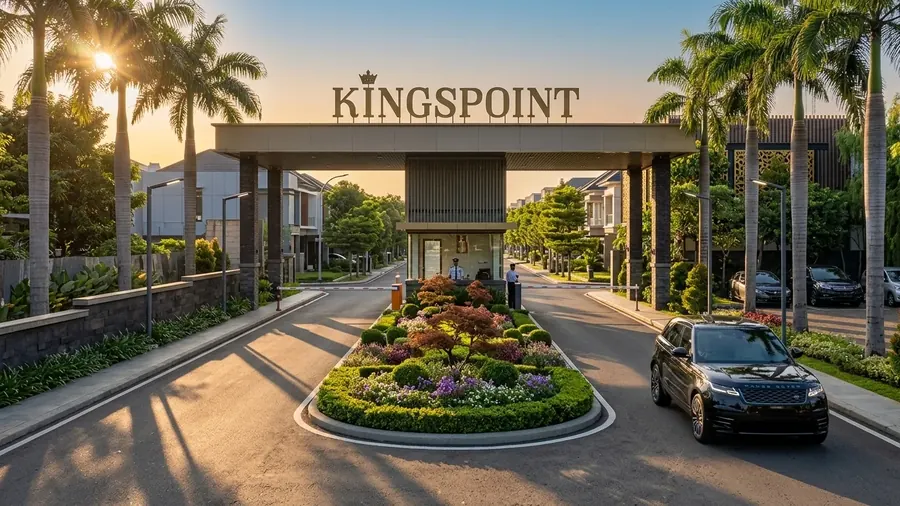
If your goal is rental cash flow, a shophouse at a busy point can enter the calculation. Ruko Sapphire at Kingspoint, for example, is three storeys plus a rooftop, land area 72 m² with 172 m² of building, 2200 VA of power, in the Rp1.9 billion range — a format flexible for running a business or leasing out. The type and spec details are on the Sapphire commercial unit page. For a home aimed at capital gain, the principle is the same: location first, price second.
Placing the MRT in the 2026 Picture
MRT Phase 3 is just one of several forces moving the Bekasi market this year. There's also the benchmark interest rate, the supply of ready-stock versus indent units, and the demand trend for two-storey homes. So your decision doesn't rest on a single assumption, it's worth reading the fuller picture in Bekasi property trends 2026 before you lock in a choice.
If I sum up a healthy stance: treat MRT proximity as a bonus on top of an already-strong location, not the whole bet. Visit the site, measure the distance yourself, check legality and project status, then work out how long you can afford to hold the asset. The investors who win usually aren't the fastest in — they're the ones most ready to wait.
Want to discuss capital gain potential along the Bekasi MRT line?
The Kingspoint team can help map where the homes and the Sapphire commercial unit in North Bekasi sit against the MRT Phase 3 plan, and stay honest about the risks and time horizon — so your investment decision rests on the math, not the hype.
Chat on WhatsApp Now