
There's one situation that keeps happening in Bekasi housing clusters. A woman starts selling cakes and frozen food out of her home kitchen. At first it's just WhatsApp orders, with a courier picking up once a day. No problem. A few months later orders pick up, the courier is going in and out of the gate five or six times a day, and motorbikes idle in front of her house waiting on packages. Then comes the message from estate management: "Please scale back the commercial activity — neighbors have complained about the traffic." Her business is legitimate, her cakes are good, but she still got a warning.
That's the thing — the problem is rarely the type of business. Nearly every modern cluster in Bekasi lets residents earn a little extra from home. What causes trouble is the spillover onto the neighborhood: couriers piling up at the one-gate entrance, customer parking eating into the road, smells, or operating hours that disturb people. So before you open a business, the first thing to read isn't the government permit — it's the house rules inside your own cluster.
The Rules Come in Layers, and They're Often Misunderstood
Business rules in a managed housing estate are tiered. If you only read one layer, it's easy to slip up. There are four worth keeping in mind.
Cluster house rules and the residents' association bylaws (AD/ART). This is the document closest to daily life. It usually covers operating hours, parking rules, noise limits, and the clause people most often miss: the one on commercial activity run from home. Some clusters ban any business where customers come to you outright; others just ask you to notify them first. Read this clause before you start, not after you've been warned.
Residential vs commercial zoning. A house in a cluster is permitted as a place to live, not a place of business. As long as your business piggybacks on normal household activity (using the kitchen for catering, the front room for work), it's generally tolerated. The moment the house changes function entirely into a shop or warehouse, it has stepped outside its permitted use.
IPL (estate management fee) and management services. The IPL (Iuran Pengelolaan Lingkungan, the monthly estate fee) is calculated for a normal household's load. A business that produces more waste, or needs courier access every hour, adds a burden the standard IPL never accounted for. Some managers apply a different rate for units used as businesses. Check your rights and obligations in our article on cluster residents' rights and obligations around IPL so there are no surprises.
KRK and zoning. For a serious business, there's the KRK (Keterangan Rencana Kota, the city zoning statement) that determines whether a given zone may be used commercially. For a kitchen-scale online shop this rarely comes into play. But once you're thinking warehouse or physical storefront, the KRK and zoning become the deciding factor.
What's Safe, What's Risky
From the patterns visible across Bekasi clusters, the dividing line is fairly clear: a business that doesn't bring outsiders in and doesn't generate foot traffic is generally fine. The ones that draw customers, couriers, or trucks into the cluster are the ones that risk friction.
| Type of business | Allowed / Friction | Main condition |
|---|---|---|
| Online shop with no customers visiting | Generally allowed | Scheduled courier, reasonable stock, house keeps its function |
| Working from home / freelance | Allowed | No regular visitors, no signage |
| Small-scale catering / cakes | Generally allowed | PIRT (home-food permit) for packaged food, scheduled pickups, manage smell & smoke |
| Mobile salon / barber | Allowed (mobile) | Serve at the customer's home, don't pull people to your unit |
| Salon / laundry with customers visiting | Risky | Manager's permission, parking solution, operating hours, crowd limits |
| Warung (small shop) with heavy footfall | Risky | Often banned by house rules; parking pile-ups are the trigger |
| Packing warehouse with trucks/couriers every hour | Riskiest | Almost always needs a ruko (shophouse), not a home |
Here's what often trips people up: two businesses that both "sell food" can end up with very different fates. Catering, where the courier picks up once in the morning, almost never causes problems. A food warung whose customers show up and park haphazardly from 11 a.m. into the night — that's the one that instantly becomes the topic in the residents' WhatsApp group.
A simple rule of thumb: if your business adds to the number of strangers coming through the gate every day, assume it needs the manager's permission first. If it only adds one scheduled courier, it's usually fine. That difference decides whether you end up with friendly neighbors or a complaint filed with management.
Neighbors and Management: This Is the Heart of It
Most home-business warnings stem from small things that pile up. The ride-hailing courier waiting at the gate until a line forms. A customer's car parked across the next-door fence. The smell of frying drifting into a neighbor's window every afternoon. A salon blender running at 7 a.m. Each one is minor, but it happens every day, and eventually someone reports it.
That's why the cheapest and most often-skipped step is to talk to estate management before you start. Not a complicated formal permit — just give them a heads-up: the type of business, the rough courier frequency, the operating hours. A manager who knows from the start tends to become a supporter, not an obstacle. One who only finds out after a complaint is forced into defending the neighbor who protested.
A few practical things usually keep neighbors at ease: use a courier service with a scheduled pickup time, set up a waiting spot for couriers so they don't park anywhere, limit the hours you receive business visitors, and deal with smell or smoke if your business involves cooking. Community rules on this are really part of the same package as every other resident's obligations — the same logic discussed in our guide to permits for boarding houses in a cluster, where any home that brings outsiders in always needs an understanding with the neighborhood.
The Legal and Admin Side to Sort Out
For a small home business, the paperwork is lighter than people imagine. But a few things are essential to keep your business legitimate and able to scale up later.
NIB through OSS. The NIB (Nomor Induk Berusaha, the business registration number) can be obtained online for free through the OSS (Online Single Submission) system. It's your business's identity — used to open a business bank account, register on official marketplaces, even apply for funding. It's useful even for an online shop.
PIRT for food. If you sell packaged food or drinks, the PIRT (Pangan Industri Rumah Tangga, the home-food production permit) from the local health office matters — and it doubles as a selling point, since buyers are increasingly conscious of distribution permits.
Community consent. For any business that involves people coming over, the approval of nearby neighbors is often the unwritten condition that matters most. A letter of consent from the RT (neighborhood unit) or neighbors can save you if someone raises a complaint down the line.
So if your business still fits inside the rhythm of a household, sort out your NIB and PIRT as needed, notify management, and that's enough. But once revenue climbs and the house starts getting cramped with stock, couriers, or staff, that's the signal your business has outgrown the home. Forcing it to stay in the cluster only creates constant friction.
When It's Time to Move to a Ruko
There's a point where keeping a business in a cluster home costs more than it's worth. The house full of boxes until the garage can't fit a car. Couriers queuing every hour. Neighbors starting to take digs in the group chat. At this point, a ruko (shophouse) isn't about prestige. It's the solution that lets a business run hard without neighborhood drama.
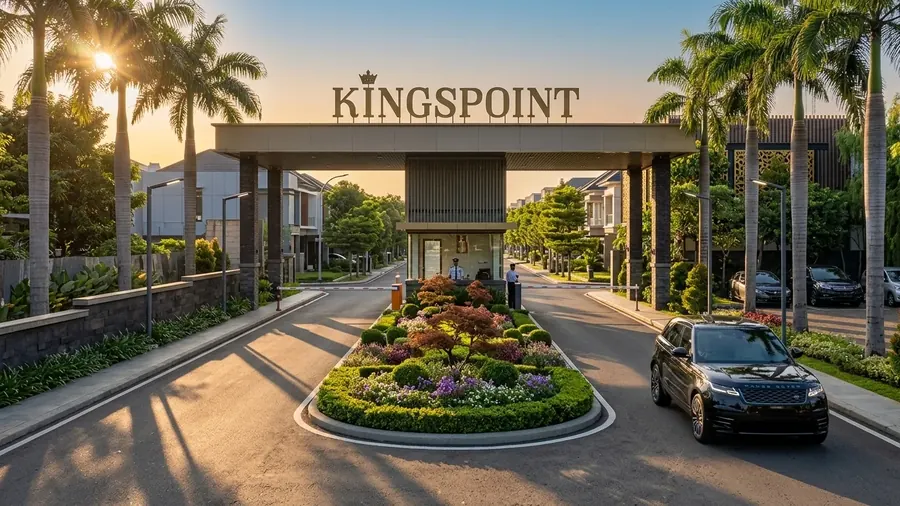
For a business that's already past the home's capacity, Ruko Sapphire at Kingspoint on Jl. Raya Perjuangan can be the right route. Three floors plus a rooftop, dimensions of 4.5 x 16 m, 2,200 VA of power, priced around Rp 1.9 billion. Enough room for a shop on the ground floor, stock or production in the middle, and an office or living space up top — without worrying about warnings over couriers coming and going. As for the recurring fees, the logic is similar to a home and can be compared via our guide to IPL and housing maintenance costs.
Moving to a ruko doesn't mean your home business failed. Quite the opposite — it's a sign your business has grown big enough that the house can no longer hold it. Plenty of business owners in Bekasi started right out of a cluster kitchen, then moved to a ruko once the scale was clear. The key is knowing when to make the jump, so you don't create friction with the neighbors that's hard to repair later.
Home business getting cramped? Ask about Ruko Sapphire options
The Kingspoint team can help check a unit's zoning, walk you through the specs of the 3-floor Ruko Sapphire on Jl. Raya Perjuangan, and run a simulation for you if your business is ready to step up from home to a ruko.
Chat on WhatsApp Now